
Quick Summary
A plumbing maintenance checklist for 2026 is a written routine of monthly, quarterly, seasonal and annual checks that catches small leaks and slow drains before they cause water damage. Homeowners can complete the basic homeowner tasks in an afternoon each month and call a licensed plumber for anything beyond that.
- Check under sinks and around toilets for moisture every month, taking about 10 minutes.
- Test shut-off valves quarterly by turning them fully and then back.
- Flush the water heater annually to remove sediment that reduces efficiency.
- Use food coloring in the toilet tank to detect a leaking flapper, waiting 15 minutes without flushing.
- Call a licensed plumber immediately for active leaks, sewage backups or a gas smell.
Table of Contents
- Why a Residential Plumbing Maintenance Checklist Matters in 2026
- Plumbing Maintenance Schedule: Monthly, Quarterly and Annual Tasks
- How to Check for Plumbing Leaks Throughout Your Home
- Water Heater Maintenance Checklist: Flushing, Valves and Safe Care
- Common Plumbing Issues in Older Homes and Warning Signs
- Preparing Your Northridge Home’s Plumbing for Seasonal Changes
- Booking Your Next Plumbing Inspection with Arsenal Plumbing
- Frequently Asked Questions
Why a Residential Plumbing Maintenance Checklist Matters in 2026
Last Updated: November 5, 2026
A residential plumbing maintenance checklist in 2026 is less about fixing what’s broken and more about catching small problems before they turn into water damage.
At Arsenal Plumbing, we have served homeowners and property managers across the San Fernando Valley since 1993, and the same problems come up again and again in older and newer homes alike.
Plumbing systems rarely fail without warning. A faucet drips for weeks before the washer gives out. A slow drain sits for months before it backs up.
Three things make a checklist worth keeping:
- It turns guesswork into a schedule. You stop wondering whether to check the water heater and simply check it on the first Saturday of each quarter.
- It catches slow leaks. Many leaks show up first as a higher water bill or a faint musty smell, not a puddle.
- It documents your home. A dated record of inspections is useful when you sell the house, file an insurance claim, or hand the property to a property manager.
Plumbing Maintenance Schedule: Monthly, Quarterly and Annual Tasks
A practical plumbing maintenance schedule groups tasks by how quickly they change and by who should do them.
| Frequency | Task | Time Needed | Who Does It |
|---|---|---|---|
| Monthly | Check under sinks and around toilets for moisture | 10 minutes | Homeowner |
| Monthly | Run each faucet and watch for slow drainage | 5 minutes | Homeowner |
| Monthly | Review the water meter or bill for unexplained increases | 5 minutes | Homeowner |
| Quarterly | Test shut-off valves by turning them fully, then back | 15 minutes | Homeowner |
| Quarterly | Inspect washing machine hoses for bulges or cracks | 10 minutes | Homeowner |
| Quarterly | Clear sink stoppers and check drain flow | 15 minutes | Homeowner |
| Seasonal (spring) | Check irrigation valves and sprinkler heads for leaks | 20 minutes | Homeowner |
| Seasonal (fall) | Clear gutters and confirm downspouts drain away from the foundation | 30 to 60 minutes | Homeowner |
| Seasonal (fall) | Test the sump pump by raising the float | 10 minutes | Homeowner |
| Annual | Flush the water heater to remove sediment | 1 to 2 hours | Homeowner or professional |
| Annual | Test the water heater temperature and pressure relief valve | 15 minutes | Homeowner |
| Annual | Schedule a professional inspection of the main line and fixtures | Varies | Professional |
| Annual | Camera-inspect the main sewer line in homes with cast iron drains | Varies | Professional |
Work through the monthly tasks on the same day each month, such as the first weekend.
Keep a simple log with the date, what you checked, and anything unusual.
Anything beyond basic homeowner checks, cutting into a wall, replacing a valve body, or opening a main line, belongs to a licensed plumber.
How to Check for Plumbing Leaks Throughout Your Home
Start with a whole-home walkthrough rather than a single room. Leaks hide behind walls, under cabinets, and below floors, so look for the indirect signs first.
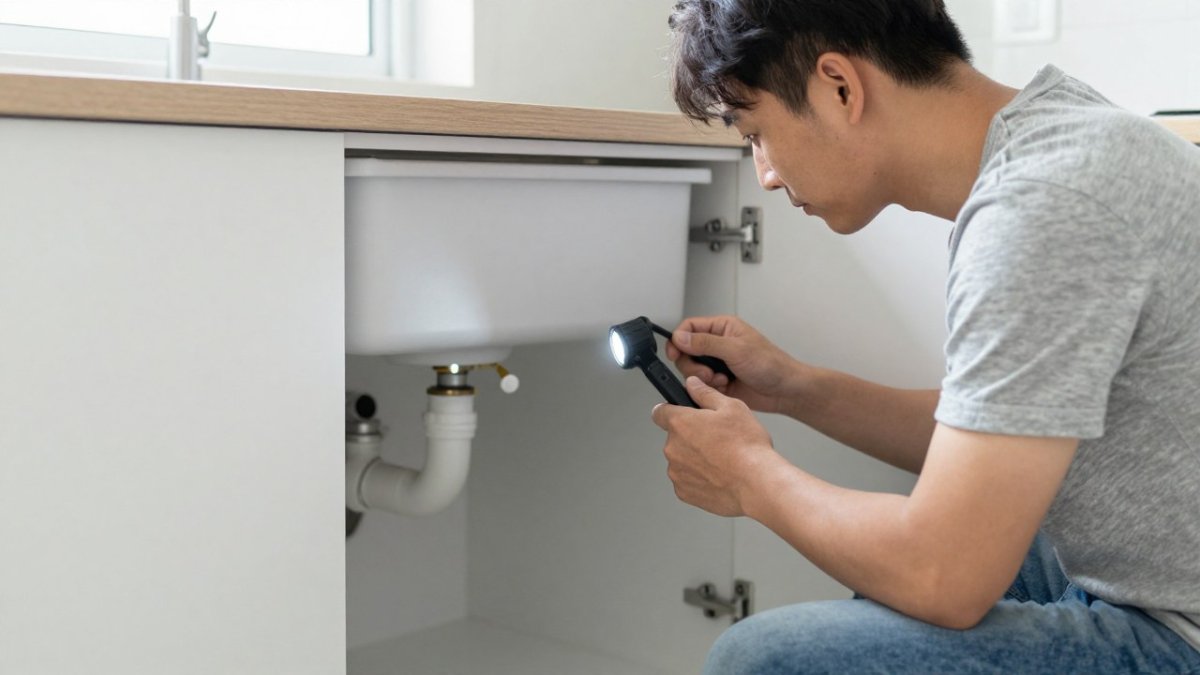
Check these areas each month:
- Under every sink. Dry the cabinet floor, then check the supply lines and drain trap after a few minutes of running water.
- Around every toilet. Look at the base for moisture or staining and listen for a running tank.
- At the water heater. Check the base, connections, and the floor beneath for drips or rust.
- Along visible pipes. In basements, crawlspaces, and utility rooms, look for corrosion, white crust on joints, or damp insulation.
- At the water meter. With all water off, a moving meter dial means a leak somewhere in the system.
A homeowner kneeling in a bright kitchen beside an open under-sink cabinet, inspecting pipe joints with a flashlight. The homeowner is American.
Faucets, Fixtures and Toilets
Faucets and toilets produce the most common leaks because their parts wear with daily use.
Toilets are harder to diagnose. Put a few drops of food coloring in the tank and wait 15 minutes without flushing.
Watch out: a toilet that needs its wax seal replaced can leak at the base even when the tank works perfectly. Staining or a rocking toilet at the floor is the signal to act.
Washing Machine Hoses, Gutters and Sump Pumps
Washing machine hoses are inexpensive to replace and expensive to ignore. Rubber hoses should be swapped every few years, and braided stainless steel hoses are a common upgrade.
Gutters and downspouts matter because water that pools near the foundation can work its way toward the pipes and drains.
If your home has a sump pump, test it by pouring water into the pit until the float rises.
Water Heater Maintenance Checklist: Flushing, Valves and Safe Care
A water heater is the appliance most likely to cause serious water damage when it fails, so it deserves an annual routine.
- Turn off the power or gas supply before working on the unit.
- Attach a hose to the drain valve and run it to a floor drain or outside.
- Open the valve and flush until the water runs clear. Sediment in the tank reduces efficiency and shortens the unit’s life.
- Test the temperature and pressure relief valve. Lift the lever briefly to confirm water flows, then let it reseat. A valve that will not seal needs professional replacement.
- Check the anode rod if your model has one. A badly corroded rod means the tank is losing its protection.
- Inspect the base and connections for drips or rust once the unit is running again.
Safe care matters here. Keep the area around the heater clear, never store flammable materials close to a gas unit, and avoid setting the temperature higher than needed.
If the tank is aging and showing rust at the base, ask a licensed plumber whether replacement or repair makes more sense.
Common Plumbing Issues in Older Homes and Warning Signs
Older homes carry specific risks, and in Northridge those risks are shaped by the local housing stock and soil. For a deeper look at problems like these, see Common Plumbing Issues in Older Homes.
Sort warning signs by urgency so you know what to do first:
Stop and call a licensed plumber now:
- Active water spraying or pooling from a pipe, fitting, or appliance connection. Shut off the main water supply first, then call.
- Sewage backing up into a tub, shower, or floor drain, especially if it happens at more than one fixture. This points to a main line blockage, not a single clog.
- A gas smell near the water heater or any gas appliance. Leave the area and call your gas utility before calling a plumber.
- Water pressure that drops suddenly across the whole house, which can signal a broken main or a failing pressure regulator.
Schedule a professional inspection within days:
- Recurring sewer backups or several fixtures draining slowly at once, which call for a camera inspection of the line.
- Brown or rusty water that persists after running the tap, which can indicate corroding galvanized pipes or a failing water heater anode.
- Damp drywall, soft floors, or a musty smell with no visible source, which often means a hidden leak behind a wall or under a slab.
- A rising water bill with no change in household use.
Monitor and address at the next routine service:
- A single slow drain that clears with a basic tool but returns.
- A toilet that rocks at the floor or shows staining at the base, which suggests a failing wax seal.
- Gurgling drains that appear only when one fixture is used.
A single slow drain can often be cleared with a basic tool. If you are dealing with this, a step-by-step guide to fixing recurring sewer backups explains what to check first.
If you see active water damage, shut off the main water supply first, then call a licensed plumber.
Preparing Your Northridge Home’s Plumbing for Seasonal Changes
Northridge homes face a mix of conditions: hot, dry summers, occasional winter rain, and soil that shifts with moisture. Each of these affects plumbing in a different way.
In the warm months, watch the water heater and outdoor irrigation lines.
Before the rainy season, clear gutters, confirm downspouts drain away from the foundation, and test the sump pump if you have one.
Checking for leaks regularly can also help reduce the water you pay for each month.
Booking Your Next Plumbing Inspection with Arsenal Plumbing
A self-check catches many issues, but some problems need a licensed plumber’s tools and experience. Arsenal Plumbing offers free estimates and a free video inspection with hydrojetting, so you can see the condition of your drain lines before any work is recommended.
Whether you are a homeowner planning an annual inspection or a property manager tracking maintenance across several units, we can help you put a schedule in place. Contact us to book your next inspection.
Frequently Asked Questions
What should be included in a residential plumbing maintenance checklist?
A residential plumbing maintenance checklist should cover visible pipes and fittings for leaks, faucets and sink drains for slow drainage, toilets for running water or base leaks, water pressure readings, shut-off valve operation, water heater flushing and the condition of washing machine hoses. Include gutters and downspouts that direct water away from the foundation, and note the date of each check. Keeping a written log helps you spot patterns, such as a drain that slows every few weeks, before they become emergencies.
How often should you inspect your home’s plumbing?
Most homeowners benefit from a simple monthly walkthrough, a quarterly check of drains, valves and the water heater, and an annual professional inspection. Monthly tasks include looking under sinks and around toilets for moisture and testing one or two shut-off valves. Quarterly tasks cover drain behavior and pressure. The annual inspection is a good time to have a licensed plumber review the system, especially in homes more than 30 years old.
What plumbing maintenance should homeowners do each month?
Each month, check under every sink and behind the toilet for drips, staining or soft flooring. Run each faucet and watch for slow drainage. Look at the water meter with all fixtures off to check for a hidden leak, and inspect washing machine hoses for bulging or cracks. Test a few shut-off valves by turning them slightly and back to keep them from seizing. These tasks take under 30 minutes and catch most small problems early.
How can you tell if a plumbing leak is hidden?
Hidden leaks often show up as an unexplained rise on your water bill, a musty smell, warped baseboards, discolored ceilings, or damp spots on floors with no visible source. To confirm, turn off every fixture and water appliance, then read the water meter. If the meter keeps moving, water is escaping somewhere. Warm spots on floors can also signal a leaking hot water line. If you suspect a hidden leak, call a licensed plumber rather than opening walls yourself.
What are common plumbing issues in older homes?
Older homes often have galvanized steel supply pipes that corrode and restrict flow, cast iron drain lines that crack or develop root intrusion, and aging shut-off valves that fail when turned. Water heaters past their typical service life may leak at the tank or fail to heat properly. Older systems may also lack modern backflow protection. Regular inspection helps identify these issues before a sudden failure causes water damage.
How do you prepare home plumbing for seasonal changes in Northridge, California?
Before summer, check outdoor hose bibs and irrigation lines. Before the rainy season, clear gutters and confirm downspouts direct water away from the foundation.
When should you call a plumber for routine maintenance?
Call a licensed plumber for an annual inspection, for any leak you cannot locate, for repeated slow drains, or for water heater issues such as rust-colored water, popping noises or temperature swings. Treat a burst pipe, sewage backup, or gas odor as an emergency and call immediately. Arsenal Plumbing offers free estimates and free video inspection with hydro jetting, and you can contact the team for current service details.
How long does a residential plumbing inspection take?
Ask the plumber what the inspection covers before booking so you know whether it includes drains, the water heater and the main shut-off valve.
