
Table of Contents
- Common Plumbing Issues in Older Homes: What You’re Really Dealing With
- 1. Outdated Piping Materials: Galvanized Steel, Polybutylene, and Lead
- 2. Leaky or Corroded Pipes, Low Water Pressure, and Clogged Drains
- 3. Pipe Bellies, Negative Slope, and Faulty Sewer Lines
- 4. Bad DIY Repairs and Outdated Fixtures and Fittings
- Replacing Galvanized Pipes Cost: What Homeowners Should Budget For
- Your Plumbing Inspection Checklist for Older Homes
- Sewer Line Repair vs Replacement: How to Decide
- Frequently Asked Questions
Last Updated: October 19, 2026
Common Plumbing Issues in Older Homes: What You’re Really Dealing With
If you own a house built before the mid-1980s, the plumbing behind your walls is living on borrowed time. At Arsenal Plumbing, we’ve spent more than three decades providing expert plumbing services to residents and businesses in the San Fernando Valley.
This guide covers the failures we see most often, how to identify what’s installed in your house, and how to tell a cosmetic problem from a structural one.
Why Age Alone Doesn’t Tell the Whole Story
A 1950s ranch and a 1970s split-level can have completely different plumbing problems. What matters more than the build year is the material era: which pipe was in fashion when your house went up, and whether anyone has updated it since.
The bigger mistake is assuming fresh paint means the pipes are fine. A house can pass a visual walkthrough and still hide a failing main water line under the front lawn.
1. Outdated Piping Materials: Galvanized Steel, Polybutylene, and Lead
The most serious plumbing issues in older homes trace back to the pipe itself. Three materials cause the bulk of the trouble.
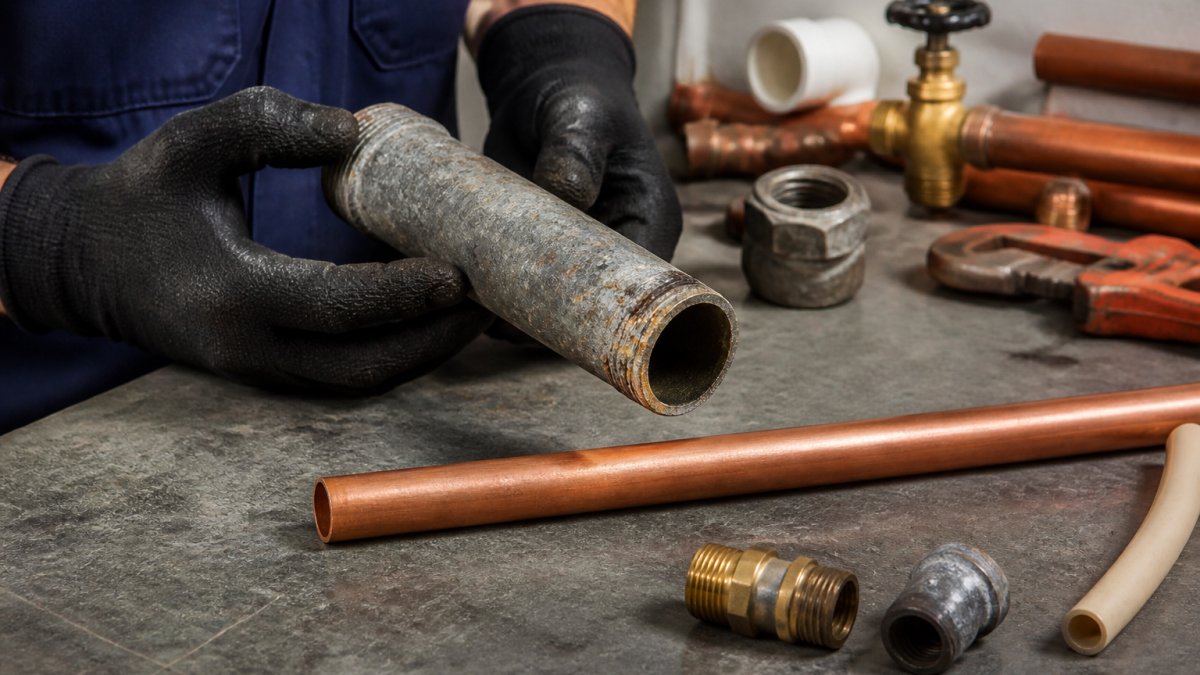
Galvanized steel pipes were standard from roughly the 1930s through the 1970s.
Polybutylene appeared in homes built or repiped between the late 1970s and mid-1990s.
Lead pipes show up in the oldest housing stock, typically pre-1950. Any home with lead service lines deserves a water quality test, since lead leaches into standing water.
Do not judge a pipe by its exterior. Galvanized steel can look intact outside while the interior is nearly closed with scale buildup. The only reliable test is a flow check or a look at a cut section.
How to Identify What’s Behind Your Walls
Start at the water heater and main shut-off valve, then follow the visible supply lines. Galvanized steel is dull gray and magnetic; copper is reddish and solder-jointed; polybutylene is gray or blue plastic with metal crimp fittings. For anything hidden, a licensed plumber can scope the system before you budget a single repair.
2. Leaky or Corroded Pipes, Low Water Pressure, and Clogged Drains
Corrosion is the root cause behind most of the leaks we repair in older homes. As pipe walls thin, pinhole leaks form and quietly rot framing and subfloor.
Clogged or slow drains usually point to decades of grease, hair, and mineral deposits in older cast iron or steel drain lines. Cast iron also rusts and eventually cracks, turning a slow drain into a full backup.
- Test pressure at two fixtures at once to see if the drop is system-wide
- Note whether water runs rusty after sitting overnight
- Check under sinks and in the basement for staining or soft drywall
If your water runs clear after a minute but starts brown after a weekend away, that’s a corrosion signal, not a supply problem. Standing water sits against rusting pipe and picks up the color.
3. Pipe Bellies, Negative Slope, and Faulty Sewer Lines
Pipe bellies are sags in a buried line where the ground has settled.
Faulty sewer lines round out the trio. Older clay or cast iron laterals crack, shift with structural movement, and invite root intrusion at the joints.
A sewer line inspection with a camera settles the question in under an hour. We offer a free video inspection with hydro-jetting.
4. Bad DIY Repairs and Outdated Fixtures and Fittings
Not every plumbing problem in an old house came with the house. Plenty were installed by a previous owner with a weekend and a hardware store run, mismatched fittings, shark-bite connectors on lines that needed soldering, and repairs that held just long enough to sell the place.
Outdated fixtures and fittings compound the risk. Old shut-off valves seize and won’t close when you need them most, worn toilet flanges leak at the base, and galvanized fittings corrode at the threads. Forcing a valve that hasn’t turned in twenty years makes it the next emergency.
Before any renovation, replace the shut-off valves serving the area. It’s a small line item that prevents a very large cleanup.
Replacing Galvanized Pipes Cost: What Homeowners Should Budget For
Replacing galvanized pipes cost is the question every homeowner with aging supply lines eventually asks. We won’t quote a single number that fits every house, but here’s the framework we use to build estimates and the variables that move the price most.
The three cost tiers of a repipe
Most repiping projects fall into one of three scopes:
- Partial repipe, Replacing only accessible runs (basement, crawlspace, attic) while leaving pipe buried in finished walls. Lowest cost and often buys 10-15 years, but leaves the most vulnerable sections untouched.
- Whole-house repipe, Replacing all supply lines from the main shut-off to every fixture. Opening, patching, and painting walls means plumbing labor is only part of the total. Highest ticket, longest service life.
- Repipe plus main line, Adding the water service line from the meter or street to the house. Common when the main is also galvanized or lead, and the most comprehensive scope.
What drives the price up or down
- Linear feet of pipe, The biggest variable. A 1,200-square-foot ranch has far less pipe than a 2,800-square-foot two-story with multiple bathrooms.
- Access, Basement and crawlspace runs cost less per foot than runs in finished walls, where drywall repair and painting add labor and materials.
- Number of fixtures, Each bathroom, kitchen, laundry, and hose bib adds tie-ins, shut-off valves, and labor hours.
The cost-benefit framework: when a repipe pays for itself
A repipe is a capital project, not a repair, so frame the decision like any other capital investment:
- Count the repairs, Three or more leak repairs on the same pipe material in two years means the cumulative cost is approaching a meaningful fraction of a repipe, and the failures will continue.
- Assess the risk, Galvanized pipe that is 50+ years old has a high probability of failure inside a wall or ceiling. The cost of a repipe is predictable; the cost of a burst pipe at 2 a.m. is not.
- Factor in insurance and resale, Some insurers surcharge or decline homes with polybutylene or lead service lines. A documented repipe can lower premiums and removes a major negotiation point, since sellers often end up crediting the buyer for a repipe anyway.
- Compare against spot repairs, A spot repair fixes one leak but leaves the rest of the system aging. If the pipe is near the end of its service life, spot repairs are a temporary patch on a systemic problem.
Get a written, line-item estimate
The only way to compare bids fairly is a written estimate with the scope spelled out line by line: linear feet, material, access method, drywall repair, permits, and disposal. Ask each contractor to separate labor from materials and state what is excluded.
If you’re facing a third leak repair on the same aging pipe, get a repipe estimate before you authorize another patch. The math usually favors the repipe once you count the repairs, the water damage, and the insurance and resale implications.
Your Plumbing Inspection Checklist for Older Homes
A plumbing inspection checklist for older homes should cover the whole system, not just visible fixtures:
| Checkpoint | What to Look For | Why It Matters |
|---|---|---|
| Supply pipe material | Galvanized, polybutylene, lead | Determines repipe urgency |
| Water pressure | Below-normal flow at multiple fixtures | Signals scale buildup or leak |
| Visible leaks | Staining, soft drywall, corrosion | Catches pinhole leaks early |
| Drain speed | Slow drains throughout the house | Points to drain line failure |
| Sewer lateral | Cracks, bellies, root intrusion | Prevents repeat backups |
| Shut-off valves | Seized or leaking valves | Critical in an emergency |
| Water heater | Age, corrosion, sediment | Prevents sudden failure |
| Fixtures and fittings | Worn flanges, outdated connections | Flags failing DIY work |
Run this checklist once a year, and again before any purchase, renovation, or insurance renewal. A documented inspection history also helps at resale.
Sewer Line Repair vs Replacement: How to Decide
Sewer line repair vs replacement comes down to the extent of the damage, the line’s material, and how often you’ve already paid to fix it. A single cracked section or localized root intrusion can often be repaired; multiple bellies, collapsed sections, or repeated failures mean replacement.
The decision framework we use
- Repair when the damage is isolated (one crack, one joint, one root intrusion), the material is sound, and this is the first failure. A spot repair or short liner section can restore service for years.
- Replace when the line has failed more than once, shows multiple defects, or is deteriorated material (old clay tile, rusted-through cast iron, or Orangeburg pipe). Replacement is the only fix that addresses the whole line.
- Line the pipe (trenchless) when access is difficult, under a driveway, patio, or mature landscaping, and the line is structurally intact but leaking at joints or cracked. Cured-in-place pipe (CIPP) lining creates a new pipe inside the old one with minimal digging.
How to tell which camp you’re in
A camera inspection is the only reliable way to see inside the line. The inspector looks for:
- Offset joints, Pipes shifted out of alignment, common in clay tile lines after decades of ground movement.
- Bellies, Sags where waste pools and solids collect. A belly can’t be repaired from the inside; it has to be excavated or the line replaced.
- Root intrusion, Roots enter at joints and cracks. A single intrusion can be cut out; a line full of roots means replacement.
The insurance and resale angle most guides skip
A sewer line failure is one of the most expensive plumbing repairs a homeowner faces, with implications beyond the bill:
- Homeowners insurance, Standard policies typically cover sudden, accidental damage (like a pipe that collapses and backs up into the basement) but exclude wear-and-tear. Some insurers offer a sewer line endorsement or service line coverage for an added premium. Ask what’s covered before you file a claim.
- Resale, Inspections flag aging sewer laterals, and buyers increasingly request a sewer scope before closing. A documented replacement or lining removes a major negotiation point and can protect your sale price.
- Disclosure, Many states require sellers to disclose known sewer line defects. A repair or replacement receipt is the cleanest way to answer that question.
What to ask before you authorize work
- Ask for the camera footage and a written diagnosis, not a verbal recommendation.
- Get a line-item estimate that separates excavation, pipe material, lining, permits, and restoration (driveway, landscaping, sidewalk).
- Confirm whether the contractor pulls the permit and whether the work is inspected.
If you’re staring down a failing line or a house full of aging pipe, the right move is a proper diagnosis, not another patch. Arsenal Plumbing has served homeowners and property managers since 1993, with certified and insured plumbers, no hidden fees, free estimates, and 24/7 emergency service.
Frequently Asked Questions
How long should plumbing last in a home?
It depends on the material. Copper typically lasts 50 to 70 years, galvanized steel often fails in 40 to 50 years, and polybutylene can degrade in as little as 10 to 15 years. Cast iron sewer lines may last 50 to 100 years but are prone to corrosion and root intrusion. If your home’s plumbing is past these windows, schedule an inspection before small leaks turn into major plumbing issues.
What kind of plumbing do older homes use?
Homes built before the 1960s often have galvanized steel supply lines, which corrode from the inside and restrict water pressure. Homes from the late 1970s through the mid-1990s may contain polybutylene, a plastic piping that becomes brittle over time. Older properties can also have lead service lines, cast iron drains, or brass fittings. A licensed plumber can identify each material during a walkthrough inspection.
What are the signs of failing pipes in an older home?
Watch for discolored water, pinhole leaks, low water pressure at multiple fixtures, rust-colored stains near joints, and slow drains throughout the house. A spike in your water bill without a change in usage is another warning sign. Recurring clogs or gurgling sounds from drains can point to a failing sewer lateral. Any of these symptoms warrants a professional leak detection and sewer line inspection before damage spreads.
Should I replace all the plumbing in an older home?
Not always. A full repipe makes sense when galvanized or polybutylene lines are failing in multiple locations or water quality has declined. If problems are isolated, targeted repairs may be enough. A video sewer line inspection and pressure test will show how much of the system is compromised. Get a written assessment before committing to whole-house replacement.
What is the difference between galvanized steel and copper piping?
Galvanized steel is coated with zinc to resist rust, but the coating wears away over decades, causing internal corrosion and scale buildup that chokes water flow. Copper doesn’t rust and handles heat well, but it can develop pinhole leaks in aggressive water conditions. Most plumbers today treat galvanized steel as a replacement candidate and copper as a durable but aging material worth monitoring.
How do I know if my sewer line is damaged?
Persistent backups, gurgling toilets, sewage odors in the yard, and unusually lush patches of grass above the line are common clues. Multiple slow drains throughout the house point to a main line problem rather than a single clog. The only reliable confirmation is a camera inspection of the sewer lateral, which shows cracks, root intrusion, pipe bellies, and negative slope.