
Last Updated: October 26, 2026
Quick Summary
Sewer line repair addresses damage from tree roots, grease buildup, ground movement, and pipe corrosion. Common signs include sewage backups, multiple slow drains, soggy yard patches, odors, and pest activity. Professional camera inspection diagnoses the problem, and repair methods range from spot repairs to full replacement depending on damage severity.
- Tree roots penetrate cracks in clay tile and cast iron pipes common in pre-1980s homes.
- Multiple fixtures backing up or draining slowly at once signals a main line problem, not individual clogs.
- Sewer line camera inspection reveals blockages, cracks, root intrusion, and exact damage location without digging.
- Trenchless methods like CIPP lining and pipe bursting reduce excavation but are not suitable for collapsed pipes or severe damage.
- Repair costs depend on damaged section length, line depth, pipe material, repair method, site conditions, and restoration needs.
Table of Contents
- What Causes Sewer Line Damage
- 5 Signs of a Broken Sewer Line
- How Sewer Line Camera Inspection Diagnoses Damage
- Repair vs. Replacement: When Trenchless Sewer Line Repair Works
- Understanding Sewer Line Repair Cost and What Affects It
- Immediate Steps if You Suspect Sewer Damage
- Schedule Your Professional Sewer Line Inspection
- Frequently Asked Questions
What Causes Sewer Line Damage
Your sewer line is out of sight until something goes wrong. Knowing what damages it helps you catch problems early.
Tree roots are a leading culprit: drawn to moisture, they penetrate small cracks in older pipes and expand over time.
Ground movement, soil shifts, freeze-thaw cycles, heavy vehicle traffic, can crack or collapse pipes. Corrosion attacks older pipes from the inside out, and improper installation or poor slope prevents waste from flowing correctly.
Most show clear warning signs before they become emergencies.
5 Signs of a Broken Sewer Line
A broken sewer line creates distinct symptoms inside and outside your home. Recognizing them early lets you call for help before the problem escalates.
Sewage Backups Inside Your Home
Sewage backups are the most obvious sign of sewer line trouble. Learn how to fix recurring sewer backups with detailed step-by-step guidance.
Waste cannot flow out, so it reverses and fills the nearest low point. A single backup might be a clogged drain, but multiple fixtures backing up at once signals a main line problem. Stop using water immediately and call a professional, sewage exposure poses serious health risks.
Slow Drains Throughout Multiple Fixtures
When several drains slow down at once, the blockage is likely in the main sewer line, not individual pipes. Your toilet, shower, and sinks all drain into that line, so a partial block by roots, grease, or debris slows everything.
A single slow drain is usually a local clog; multiple slow drains point to a main line issue. Note the patterns, after heavy rain, or at certain times of day, to help a professional diagnose whether it’s a blockage, a break, or root intrusion.
Unusually Green or Soggy Yard Patches
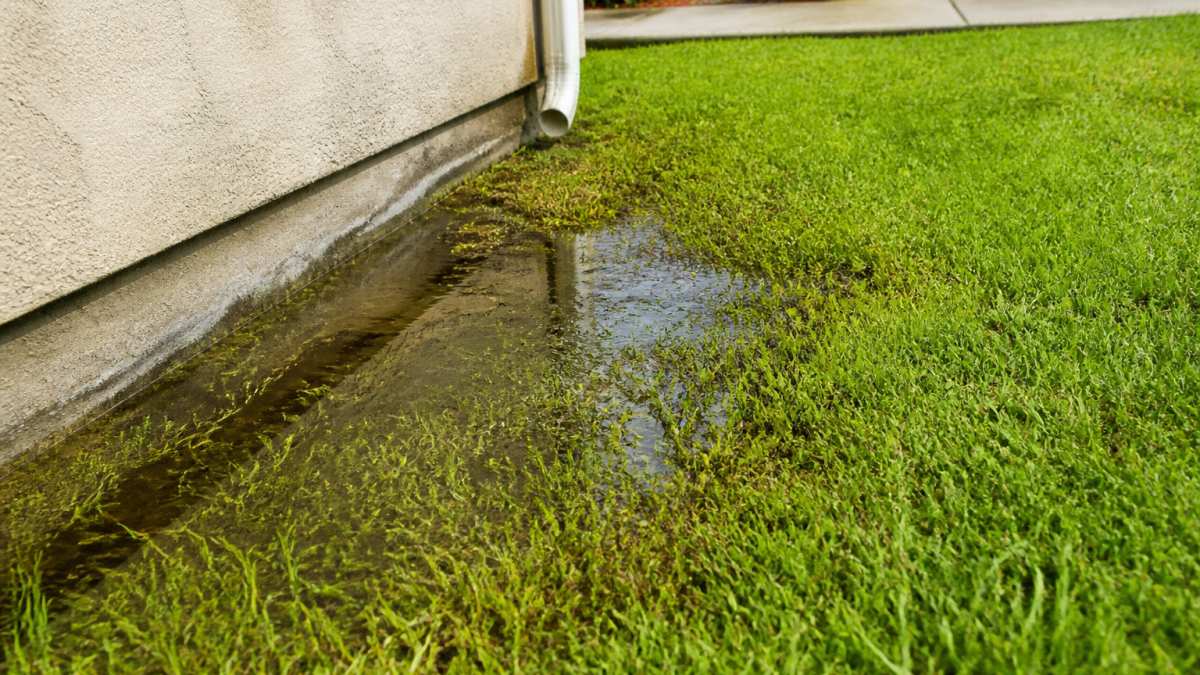
Sewage is nutrient-rich. When a sewer line cracks underground, raw sewage seeps into the soil, and the grass above often grows faster and greener than the rest of your yard. The ground may also feel soft or spongy.
In dry seasons these patches may be the only visible clue; in wet seasons you might see pooling that doesn’t dry out.
Persistent Odors Around Your Property
A strong sewage smell near your foundation, yard, or driveway indicates a break. Methane and hydrogen sulfide gases escape through cracks and rise to the surface, often worst after heavy rain when groundwater pressure increases.
Don’t ignore it: these gases can be hazardous, and the break allows contamination into soil and groundwater. A professional inspection pinpoints the source and determines whether you need repair or replacement.
Rodents or Pest Infestations
Rats and other pests are attracted to sewer lines, and a crack or break gives them an entry point into your home. An unusual increase in rodent activity or droppings, especially near drains or in the basement, may point to a sewer line break.
Rodents can enter through the main line and travel into branch drains. Combined with slow drains, odors, or soggy patches, pest activity warrants a professional sewer line inspection.
How Sewer Line Camera Inspection Diagnoses Damage
A sewer line camera inspection is the gold standard for diagnosis.
The camera reveals blockages, cracks, breaks, root intrusion, grease buildup, and pipe material, showing the exact location and severity of damage.
Video inspection also documents your pipe’s material and condition, clay tile, cast iron, PVC, or concrete, which informs repair decisions. Some damage can be fixed with trenchless repair; other situations require full replacement.
Repair vs. Replacement: When Trenchless Sewer Line Repair Works
Not every sewer line problem requires full replacement, and not every trenchless method fits every failure. The right choice depends on the damage type, location, and extent, the pipe material, and your property’s access. Here’s how the main options compare.
The four common repair approaches
1. Spot repair (open-cut). The crew excavates at the damage, cuts out the failed section, and replaces it with new pipe and couplings.
**2.
3. Pipe bursting. A bursting head is pulled through the old pipe, fracturing it outward while pulling new pipe into the same alignment.
4. Full open-cut replacement. The line is excavated and replaced along its length.
Choosing by damage type
- Single crack or localized break, sound pipe elsewhere: spot repair.
- Cracks, joint separation, or root intrusion along a run of structurally sound pipe: CIPP lining.
- Deteriorated or failing pipe with sound alignment: pipe bursting.
- Collapsed pipe, multiple failures, severe bellies, or bad alignment: full replacement, or a combination of methods.
Access, yard impact, and disruption
Trenchless methods reduce excavation but are not excavation-free. Lining generally needs only cleanout access; pipe bursting needs a launch and receiving pit; spot repair needs a pit at the damage; full replacement needs a trench along the run. Ask each contractor to describe the pits or trenches required, where they’ll be, and how restoration is handled, so you can compare bids on equal terms.
What the camera inspection decides
The camera inspection separates a guess from a plan. It shows the damage type, location and extent, pipe material and condition, and whether alignment is sound, evidence that determines which methods are viable. A contractor who recommends a method before inspecting the line is guessing.
Trenchless methods are not a universal fix. A collapsed pipe, a severe belly, or a line with multiple failures may not be a candidate for lining or bursting, and a contractor who promises otherwise without a camera inspection is worth a second opinion.
Understanding Sewer Line Repair Cost and What Affects It
Sewer line repair pricing is one of the least transparent parts of the trade. Most contractors quote after an inspection, and the number can swing by thousands of dollars depending on what the camera finds. Understanding the cost drivers before you call lets you compare bids fairly and spot a quote that is too good to be true.
The main cost drivers
- Length of the damaged section. A spot repair on a short run is priced very differently from replacing a full lateral. Most residential laterals run roughly 40 to 100 feet from the house to the public main, and length is usually the single biggest multiplier.
- Depth of the line. A line four feet down is cheaper to access than one eight or ten feet down. Deeper trenches require shoring, more labor, and more restoration.
- Pipe material and diameter. Clay tile, cast iron, PVC, and concrete behave differently under repair. Matching an existing material or transitioning between materials adds fittings and labor.
- Repair method. Spot repair, cured-in-place lining, pipe bursting, and open-cut replacement each carry different equipment, labor, and disposal costs. Trenchless methods often reduce restoration costs but carry their own equipment premiums.
- Access and cleanouts. If a usable cleanout exists, the job is simpler. If the technician must create one or work through a toilet pull, labor time rises.
- Site conditions. Landscaping, driveways, sidewalks, mature trees, and utility conflicts all affect excavation and restoration. A line under a concrete driveway costs more to reach than one under lawn.
- Permitting and inspection. Many jurisdictions require a permit for sewer lateral work and an inspection before backfill. Permit fees and inspection scheduling vary by authority and add both cost and time.
Estimate versus fixed quote
These two terms are not interchangeable, and the difference matters when you sign.
- An estimate is a professional judgment of likely cost based on what is visible and known at the time. It can change if the camera reveals worse damage, if excavation uncovers a utility conflict, or if the pipe is deeper than expected.
- A fixed quote (sometimes called a flat-rate or not-to-exceed price) commits the contractor to a set price for a defined scope of work. It protects you from surprises but usually requires a completed inspection and a clearly written scope.
Ask every contractor which one you are getting, what is included (permits, restoration, disposal, inspection), and what conditions would trigger a change order. A written scope beats a low number every time.
How to compare bids
Get at least two or three written bids on the same scope. Compare the method proposed, the length and depth assumed, whether permits and restoration are included, the warranty terms, and whether a post-repair camera inspection is part of the price. A bid that is dramatically lower than the others usually omits something, often restoration, permitting, or verification.
Ask for the camera inspection footage and the written scope before you compare prices. Two bids on different scopes are not comparable, no matter what the totals say.
The most reliable way to understand your actual costs is to schedule a professional sewer line inspection with Arsenal Plumbing.
Immediate Steps if You Suspect Sewer Damage
If you notice signs of a broken or damaged sewer line, act quickly but carefully. First, stop using water if possible, every gallon you drain puts pressure on a damaged line and can worsen the problem.
Don’t attempt to clear the line yourself with a plumbing snake or chemical drain cleaner.
Call a licensed plumber immediately. Describe the symptoms you’ve noticed, backups, slow drains, odors, soggy patches, or pest activity. A professional can help identify the problem.
In the meantime, minimize water use. Avoid flushing unnecessary items, running multiple loads of laundry, or taking long showers.
Schedule Your Professional Sewer Line Inspection
A broken or damaged sewer line is a serious problem, but it’s solvable with the right diagnosis and professional repair.
When you suspect sewer line damage, contact Arsenal Plumbing for expert sewer line repair services.
Don’t wait for the problem to worsen. Get a free estimate and schedule your sewer line inspection today.
A damaged sewer line creates costly problems if ignored. Contact us for a free estimate.
| Sign | What It Indicates | Next Step |
|---|---|---|
| Sewage backup in lowest fixtures | Main line blockage or break | Stop water use, call professional |
| Multiple slow drains | Main line partial blockage | Schedule camera inspection |
| Soggy or unusually green yard patches | Sewer line break underground | Get professional help |
| Persistent sewage odors | Gases escaping through crack or break | Professional inspection needed |
| Sudden rodent activity | Break providing entry point | Combine with other signs, inspect line |
Frequently Asked Questions
What are the most common signs of a broken sewer line?
The most common signs include sewage backing up into toilets or drains, multiple slow drains throughout your home, unusually green or soggy patches in your yard, persistent sewage odors, and rodent infestations. If you notice any combination of these, contact a plumbing professional.
How does sewer line camera inspection work?
A sewer line camera inspection uses a waterproof camera attached to a flexible cable that plumbers feed through your drain system. The camera transmits real-time video to a monitor, allowing technicians to see inside your pipes, identify cracks, root intrusion, grease buildup, or collapse without digging. This non-invasive method pinpoints exactly where damage occurs and helps determine whether repair or replacement is needed.
What is trenchless sewer line repair and when can it be used?
Trenchless sewer line repair uses methods like pipe lining (inserting a resin-saturated liner inside the damaged pipe) or pipe bursting to fix damage without excavating your yard. It works best for cracks, small collapses, and root intrusion in pipes that are still structurally sound. Severely damaged or completely collapsed pipes typically require full replacement, which may involve trenching. A camera inspection determines which method suits your situation.
What factors affect sewer line repair cost?
Sewer line repair cost depends on the damage severity, repair method chosen (cleaning, lining, or replacement), pipe depth and length, soil conditions, and whether your property has landscaping or hardscape that must be restored. Contact Arsenal Plumbing for a free estimate and video inspection to understand the exact cost for your situation.
