
Last Updated: November 4, 2026
Quick Summary
For emergency drain cleaning at a restaurant, first stop water flow to the affected drain, isolate the wet area, and protect food and equipment. Then call a licensed plumber who can clear the line and find the cause, since repeat backups often point to grease buildup or a grease trap problem.
- Shut off dish machines and prep sinks feeding the affected line before anything else.
- Move food and clean dishware away from the backup, and discard any food that touched wastewater.
- Do not pour household chemical drain cleaners into a commercial line.
- Note the time, affected drains, and how far water spread for your inspection and insurance records.
- Arsenal Plumbing provides 24/7 emergency service in Northridge and the San Fernando Valley.
Table of Contents
- Why Restaurant Drains Back Up During Service
- First Steps to Contain a Kitchen Backup Safely
- Telling a Local Clog From a Main Line or Grease Trap Problem
- What Commercial Drain Cleaning Cost Looks Like in Practice
- Restaurant Kitchen Drain Cleaning: Prevention Between Emergencies
- Getting 24 Hour Emergency Drain Cleaning for Restaurants in Northridge
- Scheduling Your Next Step With Arsenal Plumbing
- Frequently Asked Questions
If a restaurant kitchen floor drain starts backing up in the middle of dinner service, every minute matters. Arsenal Plumbing has served the San Fernando Valley since 1993, and provides 24/7 emergency service. This guide explains what to do in the first minutes, how to tell a local clog from a bigger problem, and how to keep your kitchen running between emergencies.
Why Restaurant Drains Back Up During Service
Restaurant drains back up for a simple reason: they receive far more load than a home drain. Kitchens push grease, food solids, and heavy water use into the same lines during peak hours. When that volume meets a partial blockage, the water has nowhere to go.
The most common culprit is fats, oils, and grease (FOG) that cool and harden inside pipes. A line that looked fine at lunch can be half-blocked by dinner.
Grease buildup and floor drain overflow
Floor drains are often the first place a problem shows. Grease collects on the pipe walls, food debris catches on it, and eventually the drain starts gurgling or pooling water. Floor drain overflow is usually a warning sign that the blockage is further down the line.
Watch for slow draining at multiple sinks, odors coming up through floor drains, and water pooling after a dish cycle. These symptoms often appear before a full backup.
First Steps to Contain a Kitchen Backup Safely
Your first priority is protecting people, food, and the surfaces food touches. A commercial kitchen backup is not just a plumbing inconvenience; it is a potential food-safety event, and how you contain the first 15 minutes affects both your health inspection record and how much water damage the building absorbs.
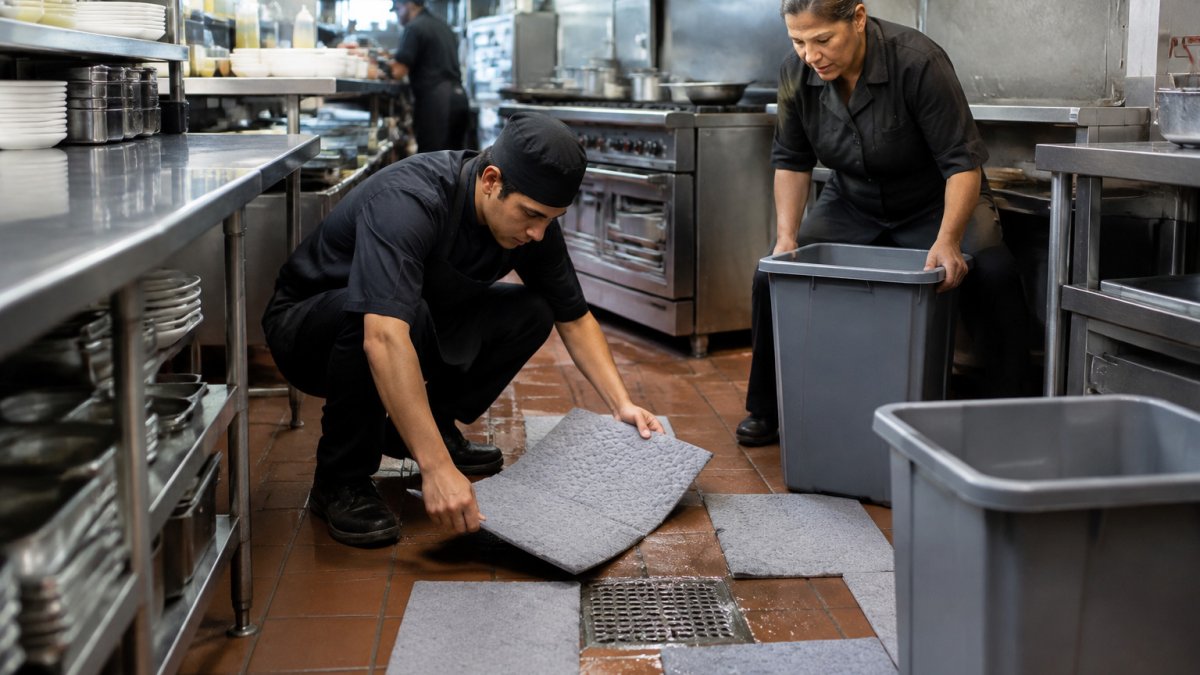
Work through these steps in order. Assign one manager to run the sequence so staff are not improvising around standing water.
- Stop the source. Shut off dish machines, prep sinks, and any hand sinks feeding the affected line. If a floor drain is overflowing, stop all water use in that zone until the flow recedes.
- Isolate the affected area. Cordon off the wet zone with cones or tape and keep staff and delivery traffic out. Wet quarry tile and stainless steel floors become slick fast, and a slip injury during service compounds the problem.
- Protect food and food-contact surfaces. Move exposed food, prep items, and clean dishware to a dry area away from the backup. Cover anything that cannot be moved. Discard any food that contacted wastewater, do not attempt to rinse and reuse it.
- Contain the wastewater. Place absorbent mats, mop buckets, or towels at the floor drain and at the edges of the wet zone to keep contaminated water from spreading toward cooking, storage, or dry-goods areas. Do not push wastewater toward another drain, since that can spread the backup to a second fixture.
- Separate clean and dirty flow. Designate one set of tools and one staff member for the affected zone. Do not let mops or towels used on wastewater touch clean prep areas.
- Document the event. Note the time, which drains backed up, how far water spread, and whether it reached food or food-contact surfaces. This record supports your health inspection file and any insurance claim.
- Call a licensed plumber. Once the area is contained, contact a plumber for emergency drain cleaning. Give the dispatcher your address, the affected drains, and whether water reached food or equipment areas.
Watch out: Do not pour household chemical drain cleaners into a commercial line. They can damage pipes, create fumes in a confined kitchen, and leave a caustic hazard for the technician who arrives to clear the line.
While you wait, keep a log of what you observe. Which fixtures are backing up, whether the water is rising or holding steady, and whether sewage odors are present all help the technician triage the cause on arrival instead of starting from scratch.
The containment sequence runs in a fixed order, with a clear timing target for the first 15 minutes:
| Step | What to do | Time or note |
|---|---|---|
| 1. Stop the source | Shut off dish machines, prep sinks and hand sinks feeding the line | Stop water use in the zone |
| 2. Isolate the area | Cordon off the wet zone with cones or tape | Keep staff and deliveries out |
| 3. Protect food | Move food and clean dishware to a dry area | Discard food that touched wastewater |
| 4. Contain wastewater | Place absorbent mats or towels at drain and zone edges | Do not push water to another drain |
| 5. Separate clean and dirty flow | Use one set of tools and one staff member for the zone | Keep mops away from clean prep areas |
| 6. Document the event | Note time, drains affected and spread | Supports inspection file and insurance |
| 7. Call a licensed plumber | Give address, affected drains and food or equipment exposure | Contain the area first |
| Avoid | Do not pour household chemical drain cleaners into a commercial line | Can damage pipes and create fumes |
Telling a Local Clog From a Main Line or Grease Trap Problem
Not every backup has the same cause. A localized clog affects one sink or floor drain. For a step-by-step guide to diagnosing and addressing recurring backups, see step-by-step guide. A main line or grease trap problem affects several fixtures at once, and the fix is more involved. Warning signs that call for expert sewer line repair can help you tell the difference.
A local clog usually shows up at one fixture, drains slowly, and clears with basic tools. Multiple fixtures backing up together, sewage odors throughout the building, or water rising in lower drains all point to a main line or grease system issue.
A grease trap that has not been pumped on schedule often causes repeated backups even after a drain has been cleared. If the problem keeps returning within days, the trap or the main line is the likely source, and a one-time clearing will not solve it.
Note what you observe before the plumber arrives. Which drains are affected, whether the problem is getting worse, and when it started all help the technician find the cause faster.
What Commercial Drain Cleaning Cost Looks Like in Practice
Emergency drain cleaning is priced on the work required, because two backups that look identical from the kitchen can require very different jobs. Several factors can affect the final invoice, and you can identify most of them before you authorize work.
What drives the cost:
Arsenal Plumbing offers free estimates and a free video inspection with hydro jetting, and has no hidden fees or upcharges. Read how to avoid hidden plumbing fees to know what to ask before you book. For a current quote for your Northridge restaurant, contact us directly.
Restaurant Kitchen Drain Cleaning: Prevention Between Emergencies
Most restaurant backups are preventable with a steady maintenance routine. A practical maintenance guide for ongoing drain care lays out the routine step by step. Start with your grease trap: schedule pumping based on your volume rather than waiting for a slowdown. Train staff to scrape plates and dump grease into containers instead of sinks.
Set a regular drain-flushing schedule with hot water and an enzyme treatment appropriate for commercial lines. Inspect floor drains weekly for slow draining or odors. A short, consistent routine costs far less than an unplanned closure during dinner service.
Keep a record of every service visit. Patterns in the records, such as the same drain clogging every few months, help your plumber recommend lasting fixes.
Getting 24 Hour Emergency Drain Cleaning for Restaurants in Northridge
Restaurant emergencies rarely wait for business hours. Arsenal Plumbing provides 24/7 emergency service in Northridge and the surrounding San Fernando Valley.
When you call, give the dispatcher your address, which drains are affected, and whether water is reaching food or equipment areas. Our certified and insured plumbers can diagnose the cause and clear the line.
If you are a restaurant operator in Northridge, keep our number posted near your dish area so your staff can reach us quickly during an emergency.
Scheduling Your Next Step With Arsenal Plumbing
A kitchen backup is stressful, but it is manageable with fast containment and the right professional. Arsenal Plumbing has been serving the San Fernando Valley since 1993, with certified, insured plumbers available 24/7 and no hidden fees.
Frequently Asked Questions
What do restaurants use to clear drains?
Most restaurants start with a hand auger or drain snake for shallow kitchen sink clogs, and a licensed plumber uses a motorized cable machine or hydro jetting for deeper blockages in the main line. Enzyme or bacterial drain products are sometimes used for routine maintenance on grease, but they rarely clear a full backup and should not be poured into a drain that is already overflowing. If grease has solidified in the trap or line, mechanical cleaning is usually required. A technician can inspect the line with a camera first to confirm where the blockage sits before choosing a method.
How much does commercial drain cleaning cost?
Pricing depends on the location of the blockage, how far the line must be cleared, whether a camera inspection is needed, and whether service happens after hours. Free estimates and a free video inspection are available, so the quote reflects your actual drain conditions. Contact Arsenal Plumbing or visit the website for a current quote before work begins.
Can grease buildup cause a restaurant drain to back up?
Yes. Fats, oils, and grease cool and solidify inside pipes, narrowing the opening until wastewater can no longer flow. Grease that passes a poorly maintained grease trap is a common cause of repeated kitchen backups and floor drain overflows. Regular grease trap pumping and cleaning, along with keeping grease out of sinks, reduces the chance of an emergency during service hours.
When should a restaurant call an emergency drain cleaner?
Call right away if drains are overflowing into the kitchen or dining area, if sewage odors are strong, if multiple fixtures back up at once, or if water is rising in a floor drain. These signs can point to a main-line blockage rather than a local clog, which is not something to attempt alone. Stop using affected sinks and dishwashers while you wait, and keep staff out of standing water until the situation is assessed.
Call Arsenal Plumbing today to schedule emergency drain cleaning or a free estimate, and get your kitchen back on track.
